+86 13335151337
+86 13335151337
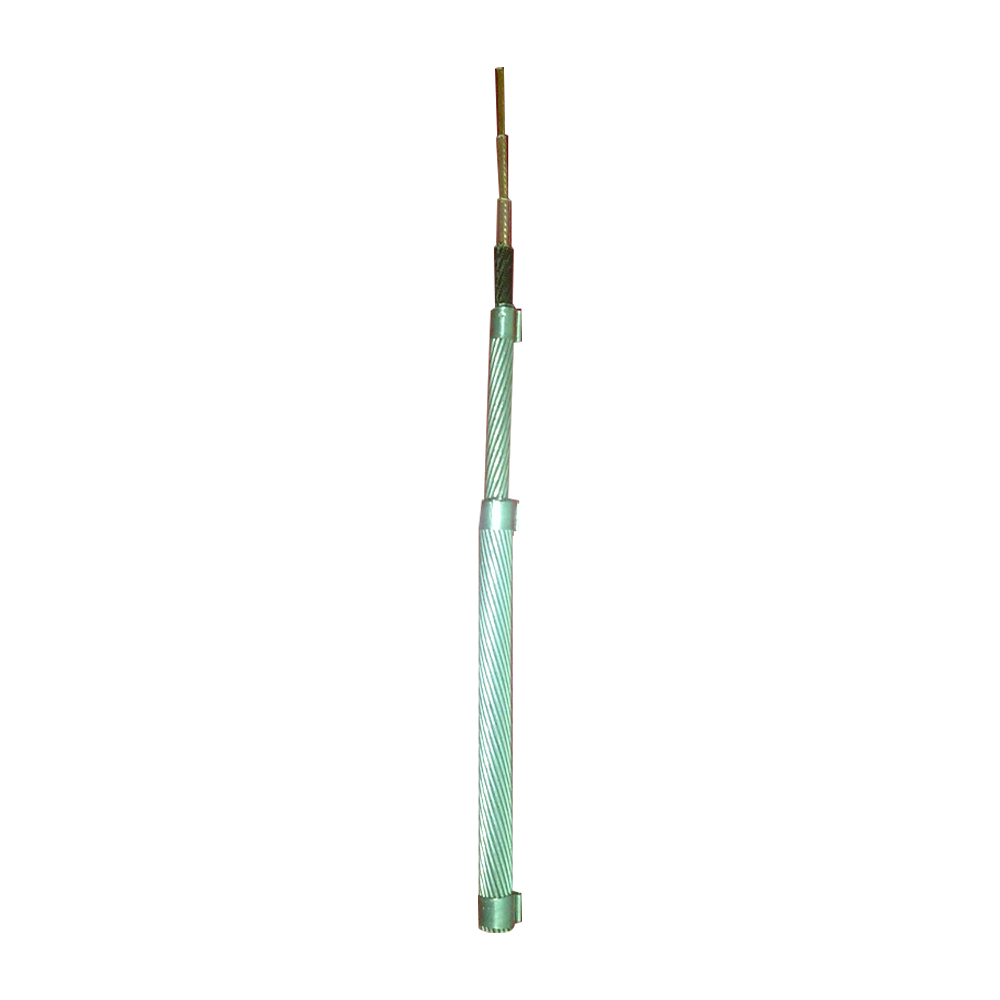
Lightweight and flexible cable for standard oilfield operations.
Features:
Applications:
Heavy-duty cable designed for deep and harsh well conditions.
Features:
Applications:
Technical Specifications
|
PROPERTIES |
||
|
Item |
7/32" (5.6mm) |
5/16" (8.0mm) |
|
Cable Diameter |
7/32" (5.6mm) |
5/16" (8.0mm) |
|
Minimum Sheave Diameter |
14" (280mm) |
18" (460mm) |
|
Cable Stretch Coefficient |
2.5 ft/kft/klbs (2.81 m/Km/5KN) |
1.2 ft/kft/klbs (3.37 m/Km/5KN) |
|
ELECTRICAL |
||
|
Item |
7/32" (5.6mm) |
5/16" (8.0mm) |
|
Maximum Conductor Voltage |
1200 VDC |
1500 VDC |
|
Conductor AWG Rating |
16 |
15 |
|
Minimum Insulating Resistance |
1500 MΩ/Kft (500 MΩ/Km) |
1500 MΩ/Kft (500 MΩ/Km) |
|
Armor Electrical Resistance |
5.53 Ω/Kft (18.1 Ω/Km) |
2.1 Ω/Kft (6.9 Ω/Km) |
|
MECHANICAL |
||
|
Item |
7/32" (5.6mm) |
5/16" (8.0mm) |
|
Cable Breaking Strength (ENBS Fixed) |
5600 lbs (24.9 kN) |
12000 lbs (53.3 kN) |
|
Maximum Suggested Working Tension |
2800 lbs (12.5 kN) |
6000 lbs (26.6 kN) |
|
Inner Armor |
12 × 0.031" (0.7874 mm) |
12 × 0.0445" (1.13 mm) |
|
Outer Armor |
18 × 0.031" (0.787 mm) |
18 × 0.0445" (1.13 mm) |
|
Avg Wire Breaking Strength (Inner Armor) |
215 lbs (0.96 kN) |
442 lbs (1.97 kN) |
|
Avg Wire Breaking Strength (Outer Armor) |
215 lbs (0.96 kN) |
442 lbs (1.97 kN) |
| PROPERTIES | ||
|
Item |
7/32"(5.6mm) |
5/16" (8.0mm) |
|
Cable Diameter |
7/32"(5.6mm) |
5/16" (8.0mm) |
|
Minimum Sheave Diameter |
14" (280mm) |
18" (460mm) |
|
Cable Stretch Coefficient |
2.5ft/kft/klbs (2.81m/Km/5KN) |
1.2ft/kft/klbs (3.37m/Km/5KN) |
FAQs
Q1: What is a load bearing exploration cable used for?
Load bearing exploration cables are mainly used for oil & gas well logging, perforating, coring, and other downhole operations. They provide load bearing, power supply, signal transmission, and depth measurement functions.
Q2: What core types are available for load bearing exploration cables?
According to the number of cores, the cables are available in single-core, three-core, four-core, and seven-core structures to meet different downhole operation requirements.
Q3: What temperature range can load bearing exploration cables withstand?
Normal temperature cables usually operate from -30°C to 150°C, while high-temperature load bearing exploration cables can withstand temperatures from -50°C to 260°C.
Q4: What is the difference between ordinary and sulfur-resistant exploration cables?
Sulfur-resistant load bearing exploration cables are specially designed for corrosive oil & gas wells containing H₂S and other harsh media, offering enhanced corrosion resistance and longer service life.
Q5: Which standard do load bearing exploration cables comply with?
Load bearing exploration cables are manufactured according to SY/T 6600-2020, the oil and gas industry standard for load-bearing exploration cables.
RELATED PRODUCTS
HOW CAN WE HELP YOU?
We offer customization to meet your specific needs. Our expert team will collaborate with you to develop the perfect product for you

Add: Baoshida Group Industrial Park, No. 8 Kaiyuan Road, East Section of North Industrial Road, Licheng District, Jinan City, Shandong Province, China
Quick Link
Quick Link
Contact Us
Get The Latest News
Get The Latest News